01What pressure cleaning does
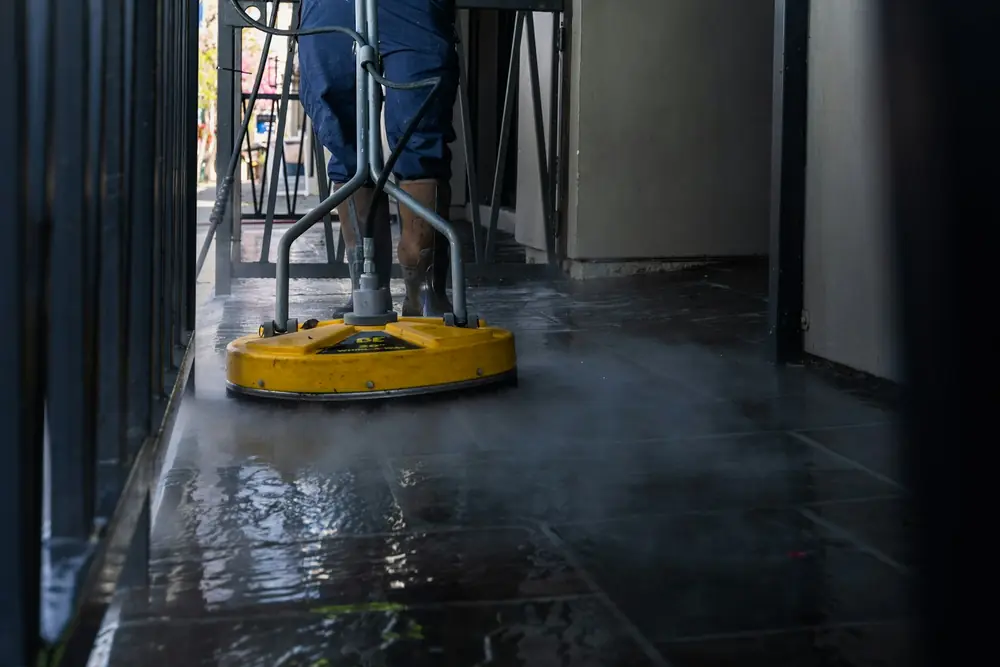
A pressure cleaner forces water out at high pressure to lift dirt, moss, algae and grime from hard surfaces. On flat areas like driveways, a rotary surface cleaner spreads the pressure evenly and avoids the stripes a hand wand can leave. Oily or greasy areas may need a detergent first to break the oil down.
02Inspect first, then choose the pressure
Concrete can take full pressure, but pavers can lose their joint sand, render and paint can be stripped, and timber can splinter. So we look at the surface first and choose the pressure, nozzle and distance to suit it. Softer surfaces get a gentler, lower-pressure wash.
03What affects the price
Pressure cleaning is usually priced by area and surface: a single driveway is quicker than a large paved courtyard with steps, edges and walls. Heavy moss, oil stains and tricky access add time. A path, patio or single driveway is usually $150–$300 including GST. Tell us what needs cleaning and roughly how big it is, and you'll get a clear price before we start.
04Water and power
Pressure cleaning uses a lot of water, so we need an outdoor tap, and a power point for the machine. We'll check access and parking when we quote.
05How often to pressure clean
Most homes pressure clean driveways and paths every one to two years, and shaded, damp areas that grow moss more often. Shopfronts, entries and bin areas at businesses often need it every few months to stay tidy and safe underfoot.
06After the clean
Surfaces look darker while they're wet, so judge the result once they're dry. Pavers may need their joint sand topped up, and some owners choose to seal concrete or pavers afterwards to keep them cleaner for longer. We'll point out anything we notice, like loose pavers or cracks.