In short
- Match the pressure and the nozzle to the surface. More pressure isn't always better.
- Timber, render, painted surfaces and roofs need a gentler approach, or a specialist.
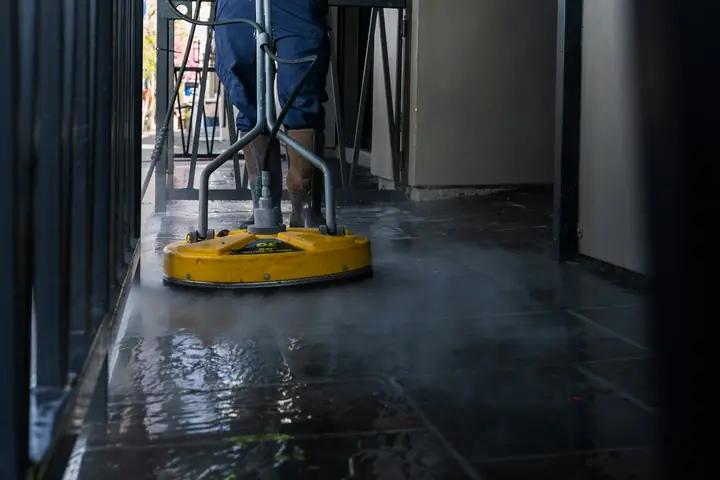
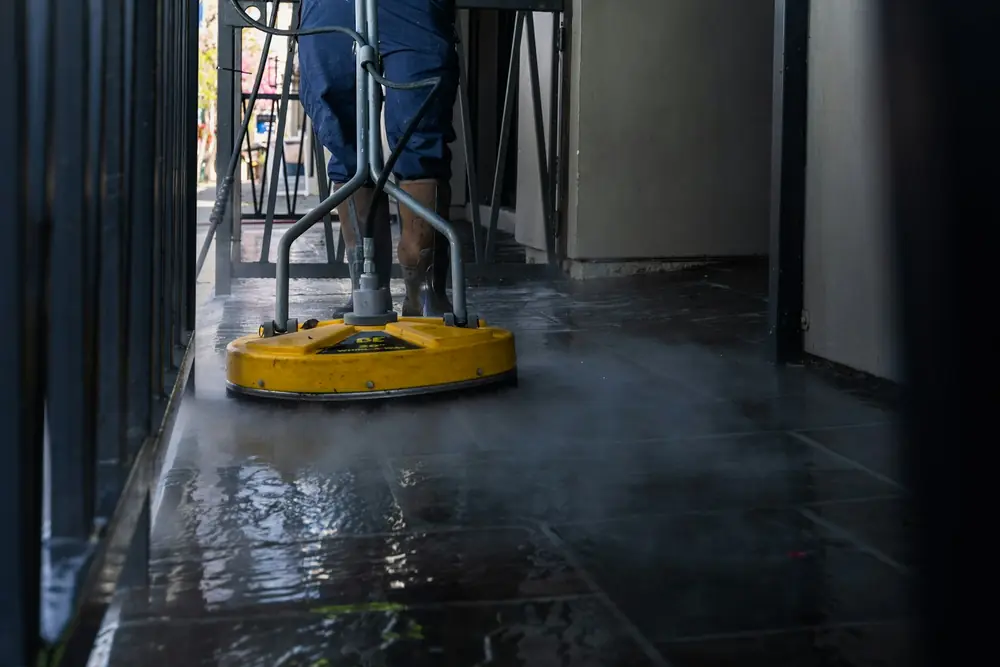
- Sweep first, work in overlapping passes and keep the jet off paver joints for an even finish.
Which surfaces suit pressure cleaning
| Surface | Pressure cleaning? | Notes |
|---|---|---|
| Concrete driveways and paths | Yes | A rotary surface cleaner gives an even finish without stripes. |
| Pavers | Yes, with care | Keep the jet off the joints, then re-sand the joints afterwards. |
| Brick walls and paving | Low pressure | High pressure can erode old mortar. |
| Timber decks | Low pressure only | Use a wide fan along the grain. Too much pressure raises the grain and splinters the boards. |
| Render and painted surfaces | Soft wash | Low pressure with a suitable cleaner, rinsed gently. |
| Roofs | Specialist job | Working at height needs proper safety equipment, and tiles crack easily. |
| Cars | From a distance | Close, narrow jets can damage paint, seals and tyres. |
Safety first
- Wear eye protection and enclosed shoes. The jet can cut skin and flick up grit.
- Never point the jet at people, pets, windows or power points.
- Keep electrical equipment and leads out of the water, and use a safety switch.
- Wet surfaces are slippery, especially when there's moss or algae.
- Read the label and safety data sheet for any cleaning chemical before using it.
Moss, mould and oil stains
Moss and algae grow back quickly if the spores are left behind, so a suitable treatment before or after cleaning helps. Oil stains on concrete often need a degreaser and several passes, and old stains may lighten rather than disappear.
After cleaning: sealing and upkeep
Once concrete or pavers are clean and completely dry, a sealer can make them easier to keep clean and slow down stains and moss. Sweep regularly, clear leaves before they stain, and deal with oil drips quickly.